Romain Pitot
I build the systems games run on — AI, netcode, procedural generation and the tools around them.
Latest Projects
The three most recent — all twelve are on the projects page

Global Invasion
2025Co-op FPS: a team of exterminators investigates infested houses by day and survives them by night.
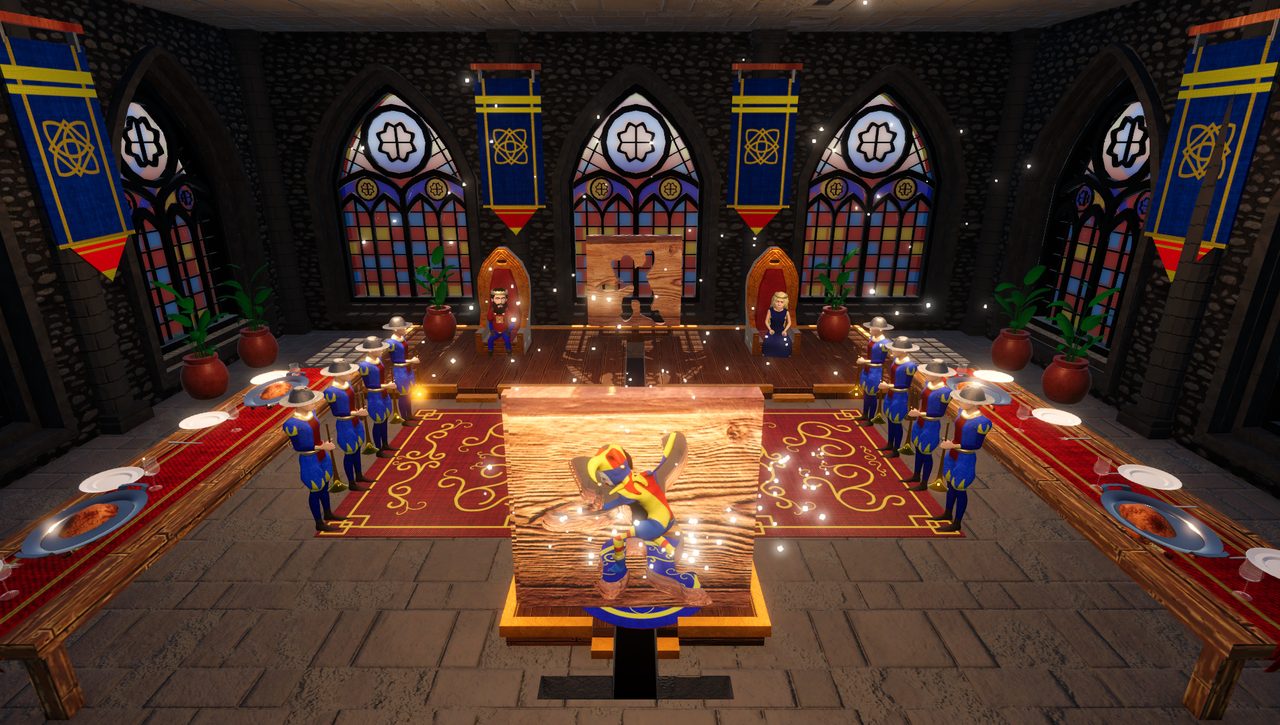
Keep Dancing to Live
2024Rhythm game: dance ridiculously as the king's jester, or it's off with your head. Global Game Jam 2024 — "Make Me Laugh."
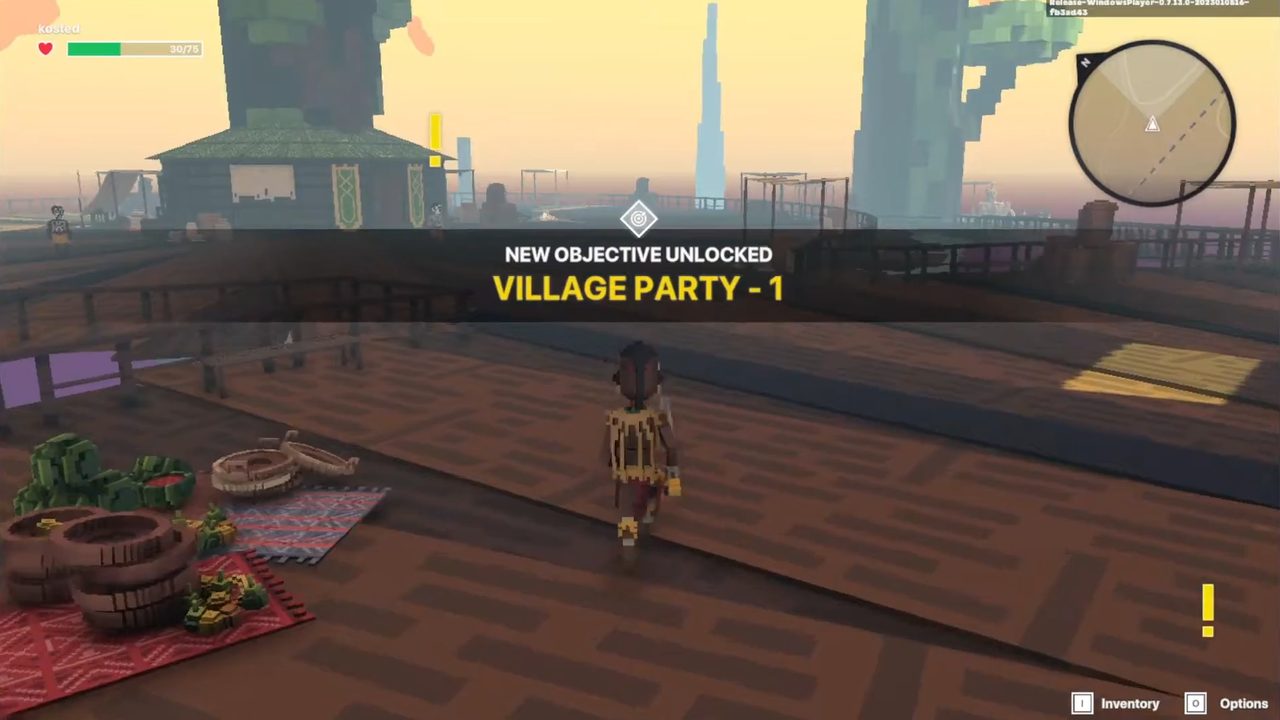
The Legend of Mulu
2023Exploration game on The Sandbox: a young girl tracks down sorcerers who stole her village's sacred artifacts.
Technical Systems
Architecture deep-dives & production-ready frameworks
Modular Inventory System
ToolsData-driven item management framework
A production-ready inventory system designed with clean architecture principles. Uses ScriptableObject-based item definitions, a grid-based slot manager, and a full serialization pipeline for save/load.
Architecture deep-dive
Architecture
The system follows a Model-View-Controller pattern. The ItemRegistry holds all item definitions as ScriptableObjects. The InventoryModel manages slot state and emits events. The InventoryView listens to events and updates the UI. A SerializationLayer converts the model to/from JSON for persistence.
Challenges
- Implementing grid-based drag-and-drop with precise collision detection
- Designing a generic item property system without per-type code
- Ensuring save/load integrity with item versioning
Solutions Implemented
- Custom RectTransform overlap detection with slot snapping
- Property bags using ScriptableObject composition
- Schema versioning with migration callbacks
Stats
BSP Dungeon Generator
ProceduralBinary Space Partitioning dungeon layout algorithm
A runtime dungeon generation system using Binary Space Partitioning. Produces varied, traversable dungeons with configurable density, guaranteed connectivity, and room-type weighting for boss/treasure rooms.
Architecture deep-dive
Architecture
BSP tree recursively splits space into leaf nodes representing rooms. A corridor-carving pass connects sibling nodes. Room metadata is then assigned probabilistically based on tree depth. The generator outputs a TileMap-compatible grid that Unity's Tilemap API populates.
Challenges
- Guaranteeing all rooms are reachable without backtracking
- Balancing randomness vs. playable level design
- Integrating enemy spawning with room context
Solutions Implemented
- Minimum spanning tree pass over room graph ensures connectivity
- Configurable depth and split-ratio constraints keep layouts playable
- Room type tagging drives spawn tables at level load time
Stats
Universal Save System
ToolsFlexible, type-safe game state serialization
A flexible save system supporting multiple save slots, auto-save, and type-safe serialization. Components register themselves as saveable via an interface, decoupling persistence logic from gameplay code.
Architecture deep-dive
Architecture
SaveableObjects implement ISaveable and register with the SaveManager on Awake. On save, the manager collects JSON blobs from all registered objects and writes them to an encrypted file per slot. On load, each object receives its own data blob and deserializes independently.
Challenges
- Avoiding tight coupling between save logic and game objects
- Handling save data migration between game versions
- Performance on large scene counts
Solutions Implemented
- ISaveable interface + SceneContext dependency injection
- Version field + migration strategy pattern
- Async write pipeline with background thread offload
Stats
Hierarchical Enemy AI
AILayered behavior tree with utility scoring
A hierarchical AI system combining behavior trees for decision logic with utility scoring for target prioritization. Enemies exhibit patrol, detection, combat, flanking, and retreat behaviors that adapt based on health and squad context.
Architecture deep-dive
Architecture
A lightweight behavior tree evaluates each tick: Selector/Sequence/Leaf nodes compose complex behavior. A utility layer weights candidate actions (attack, flank, retreat, call-for-help) using normalized sensor inputs. A steering layer handles movement using Unity's NavMesh with obstacle avoidance layering.
Challenges
- Preventing repetitive predictable enemy patterns
- Coordinating group behavior without expensive global queries
- Tuning utility weights without hand-tweaking every enemy type
Solutions Implemented
- Noise-injected utility scores add controlled unpredictability
- Squad blackboard shared via object reference, no global lookup
- Parameterized utility curves on ScriptableObject profiles
Stats
Modular Ability System
GameplayRuntime-composable gameplay ability framework
A data-driven ability system where abilities are composed from atomic Effect modules at runtime. Supports cooldowns, resource costs, targeting modes, visual feedback hooks, and runtime upgrades without code changes.
Architecture deep-dive
Architecture
AbilityDefinition ScriptableObjects hold arrays of AbilityEffect assets. At cast time, a composite executor chains effects in sequence/parallel. Targeting modes (projectile, AOE, raycast, melee) are swappable strategy objects. A visual feedback system subscribes to ability lifecycle events to drive VFX and audio.
Challenges
- Designing effects general enough to compose meaningfully
- Handling targeting across different camera perspectives
- Keeping ability logic testable without a running game
Solutions Implemented
- Atomic effects: Damage, Move, Spawn, Apply Status, Trigger Event
- Camera-agnostic targeting resolvers injected at runtime
- Effect units are pure C# classes, tested independently from MonoBehaviour
Stats
Netcode Prediction Layer
MultiplayerClient-side prediction with server reconciliation
Input[]
State
A netcode abstraction layer implementing client-side prediction, authoritative server state, and rollback/reconciliation. Designed as a wrapper around Unity Netcode for GameObjects to simplify deterministic gameplay code.
Architecture deep-dive
Architecture
Each frame, the client records input into a circular buffer and simulates locally. The server processes inputs authoritatively and broadcasts state snapshots. The client compares its predicted state against server snapshots and rolls back + re-simulates if divergence exceeds a threshold.
Challenges
- Achieving visual smoothness during reconciliation corrections
- Keeping the rollback buffer memory-bounded
- Handling physics interactions deterministically
Solutions Implemented
- Visual interpolation layer decoupled from simulation layer
- Fixed-size ring buffer with configurable history depth
- Physics inputs serialized and replayed, not physics state
Stats
Core Skills
ENGINE
- Unity
- WebGL
- Unity DOTS (learning)
- Unreal Engine (secondary)
LANGUAGES
- C#
- HLSL / Shader Lab
- Python (tools)
- C++ (secondary)
SYSTEMS
- Gameplay Systems
- AI / Behavior Trees
- Procedural Generation
NETWORKING
- Netcode for GameObjects
- Client Prediction
- State Sync
TOOLS & WORKFLOW
- Git / GitHub
- ScriptableObjects
- Custom Editor Tools
PATTERNS
- MVC / MVVM
- Observer / Event Bus
- Strategy / Factory
About Me
I'm a gameplay programmer out of Toulouse. Two years of work-study at Masseka Games Studio, a Master's in game development, four game jams — and a co-op FPS I'm currently building solo, from scratch.
Game jams are where I explore ideas fast; studio work is where I learned to ship them properly.
I specialise in Unity and C# — gameplay systems, AI, procedural generation and multiplayer networking — with some Unreal and C++ on the side.
Gameplay Programmer — Unity / C#
PDF · Updated 2026
Got a gameplay system
that needs building?
Systems work is where I'm at my best — AI, netcode, procedural generation, tools. Happy to talk about any of it.